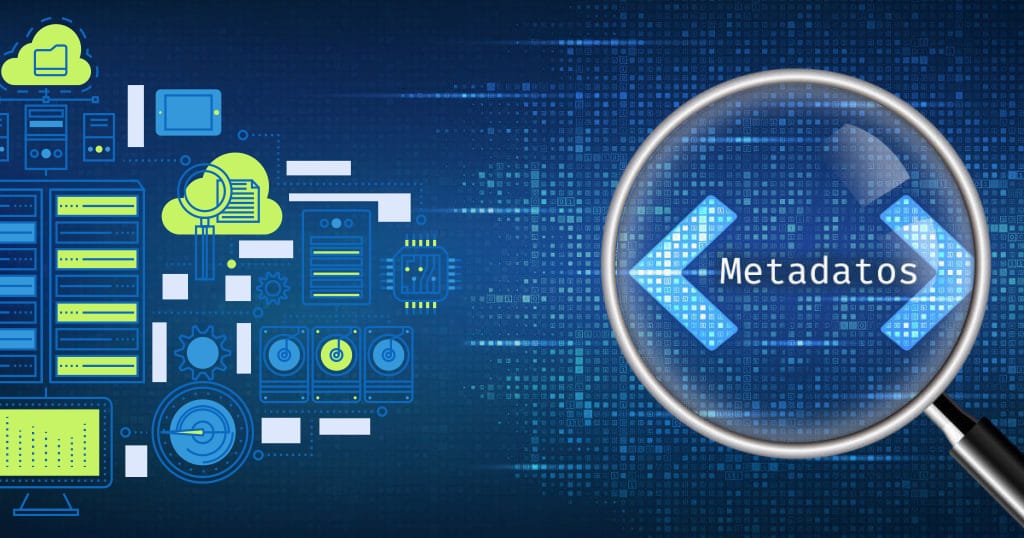

A photo you share, a tweet you post, the searches you do, the number of followers you reach, the videos and comments you like. The place from where you connect. Everything is high-value information on the network and it is data that classifies us, labels us and standardizes us in different tables and databases that will be used for commercial, political, psychological and even military purposes.
Behind all this information about our products, such as the applications that we install, the Wi-Fi networks that we have saved on our devices, the dates and places where we take the photos and many other acts that seem harmless and that we mistakenly consider private, there are codes called metadata, extremely valuable information that travels behind everything we do on the web. They are the data of the data and they say much more about you than you imagine.
Index
What is metadata?
The word metadata has its origin in the 60s, however, it did not have great relevance until after the boom of the internet and social networks. The term metadata is made up of two words, a Greek word that is “meta” that refers to after or beyond, added to the Latin word “datum” that means data. This means that the most concrete definition for metadata is “data about data” or “data beyond data”.
It is information that travels behind the data, which classifies, describes and characterizes it according to different parameters. In most cases, metadata is not easily visible, so most people are not aware that every digital act has a consequence and offers an information point for the big companies behind our screens.
The false idea of anonymity and privacy

Not being aware that everything we do says something about us, we live with a false idea of anonymity and privacy that could not be more wrong and that could not be more beneficial for those who do not want us to put ourselves on the alert and start being more cautious with our data, because what benefits large companies like Google, Facebook, Amazon, among others, is information, a product as expensive as oil itself.
A couple of years ago a study revealed that only four key pieces of information are required to establish a connection between a person and their supposedly anonymous credit history. The data is all extracted from the mobile device through GPS, such as geolocation, file metadata that includes dates and the IMEI of the device, all this added together reveals and leaves all your movements at the mercy of third parties, which turns your cell phone into a security and privacy threat.
Locating yourself geographically is more common than you might imagine and it’s also easier than we think since many, if not most, applications ask to know your geographical location. For example, Facebook has an algorithm that automatically locates the place from where you make each post or send a message on messenger, this function sometimes goes unnoticed and only stops working unless you disable it. Some other apps like Twitter, Instagram, and dating apps like Tinder have similar features that offer multiple third parties the ability to triangulate and locate you in real time and even predict what your next move will be.
You will wonder then if all this is legal, right? And the answer is yes. Not only are the big social media companies authorized to obtain and store this and much more information and your movements, but also the phone companies and data providers store the metadata of all your calls and text messages in addition to all your personal data. personal. There are several verified cases, in which the telephone companies themselves sell and market the information of their users with third parties. Additionally, we ourselves help and contribute to being spied on, there are legal terms contracts within each social network and operator, did you know? it is possible that you did not and if you knew it, it is possible that you have never read it.
In conclusion, metadata reveals almost all of our privacy without us knowing it. Now that you are more aware of this, you may be wondering what can be done to be safer from third parties, such as public and private companies or cybercriminals. Here are some recommendations.
How can we protect ourselves?
There are some tips that we can use to counteract and reduce the amount of metadata that we offer to third parties and leave as traces. Some recommendations are to review the cell phone settings and, if possible, not always offer location access permissions. It is also recommended not to publish a lot of information on networks and if you want to do it, the recommendation is that when publishing, for example, a photo, do not do it instantly after taking it, but later when you are no longer in the place where it is. you captured, it is also important to connect as little as possible to public Wi-Fi networks.
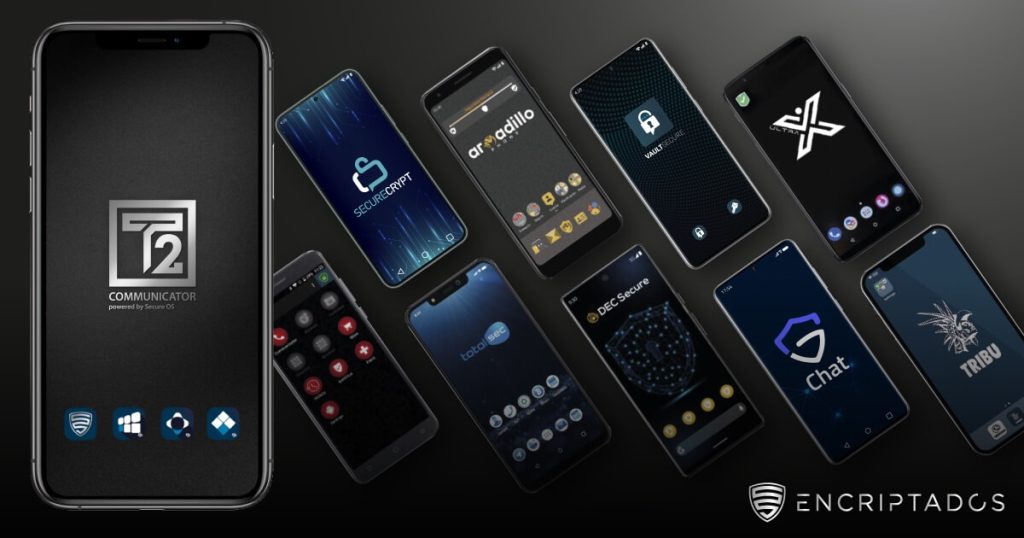
However, and unfortunately for us, all this is not enough if what we want is complete anonymity and true digital security. If what you are looking for is to take your privacy to a higher level and give an additional layer of security to your communications, the ideal option is to choose to use an encrypted cell phone that ensures that all your information remains protected and encrypted, you can also choose to replace your usual sim card for an encrypted sim card that does not store metadata or personal data and makes it impossible to geolocate you no matter where you are in the world. A good option are also encrypted applications that do not ask for your geographical location and encrypt the information you share.
In encriptados.io you will find all the ideal solutions for you to take care of your private and confidential information. We make sure that what’s private, stays private.





 Selecciona
 Bancolombia