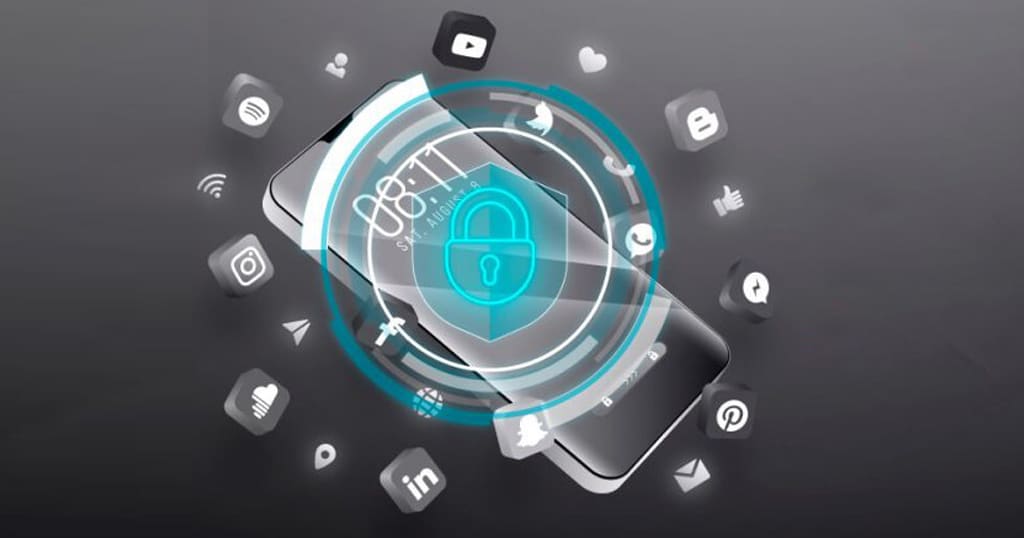

Did you know that nowadays cybercriminals rely on social networks to commit crimes? They collect information about your photos, emails, location, among other data, in order to break your passwords and extort money. That is why it is important to improve the privacy of our social networks.
Index
- Social networks and cybercriminals
- How to make your social networks private?
- Protect your privacy with encryption
Social networks and cybercriminals
Are you the type of person who constantly uploads information to social networks and posts photos of the places you visit, family, restaurants and work? Believe it or not, a little data is enough for cybercriminals or malicious third parties to study your behavior and monitor your movements in order to extort money, send you malicious links or scams to your email and even impersonate your identity.
Do you think you’re not famous or important enough for a hacker to target you? Well, you are wrong, contrary to what is believed, ordinary people and small and medium-sized companies are the favorite targets of cybercriminals, why? easy, they are the ones with the least cybersecurity and it is much easier to transfer their systems. In the digital world as in the real world there are good and bad people and believe us when we tell you that there are hackers analyzing and looking for profiles like yours all the time to be able to commit crimes.
But don’t worry, we want to give you some simple cybersecurity tips to improve privacy on your social networks and minimize the risk of falling victim to cybercriminals.
How to make your social networks private?
We bring you a series of useful tips to improve the privacy of your social networks that you can pass on to your children, family and friends.
- Do not accept unknown people in your social networks
From the same creators of Don’t Accept Candy From Strangers comes Don’t Accept Friend Requests From Strangers. We have normalized accepting and adding unknown people to our social networks and we end up with a quite extensive list of friends where in real life we know only a small part. We should try to have in our networks only people we know or at least know who they are. Let’s avoid accepting strangers or unknown people.

- Configure your networks to increase privacy
Visit the Settings tab of your Facebook, Instagram and social networks. There is usually an item called Privacy. There, it is recommended that for your personal information you choose the option that only you can see it. It is better that you do not have public items such as birthdays, mail, telephone, place where you study or work, etc.
In the option of who can see what you share, the ideal is that they are only your friends and not that you have it public. Speaking specifically on Instagram, the ideal is that your profile is private and to follow you they must send you a request, so you will have control of who you accept and who you do not. Following the advice from point one of the requests from strangers.
You can also disable the geolocation that comes by default in social networks.
- Do not tell everything on your social networks
For many people, Facebook, Twitter or Instagram become a kind of personal diary where they mention all their movements, likes, dislikes and the day to day in general. This is a pretty serious mistake, since you are giving people outside your personal circle very relevant information that they can use maliciously.
Additionally, avoid sharing your location or putting a photo with location tags as cybercriminals can know when you are away from home or profile and follow you.Try to interact moderately and conscientiously, do not tell everything, do not mention everything. We must use social media responsibly.
- Do not share passwords, emails or financial information
It sounds obvious, but the truth is that we are so immersed in the digital world that there are many people who share their keys or passwords through Whatsapp, Messenger or Instagram, give the bank key to their partner or send locations in real time . We must avoid this at all costs because if a cybercriminal hacks your social networks or your WhatsApp, they will have access to all this and can use it to steal your money, impersonate you or access your email and all your information.
By following these tips and being responsible for your personal information and making proper use of networks, you can minimize the risk of being a victim of cybercrime. However, if what you are looking for is total and complete protection, we recommend using secure systems such as Encrypted .
Protect your privacy with encryption

Encryptados.io has different tools that can help you improve your privacy in the digital world. Learn about the best encrypted cell phone brands on the market to ensure military-grade protection in all your personal and business communications.
You can also use encrypted applications with strict security policies so that everything you share is safe and you can make calls or video calls 100% safely.
Or simply change your sim card for the Encrypted Sim that will give your mobile device a strong layer of security so that no third party accesses your information and you remain anonymous and protected.
Your privacy is important, protect it with Encrypted.





 Selecciona
 Bancolombia